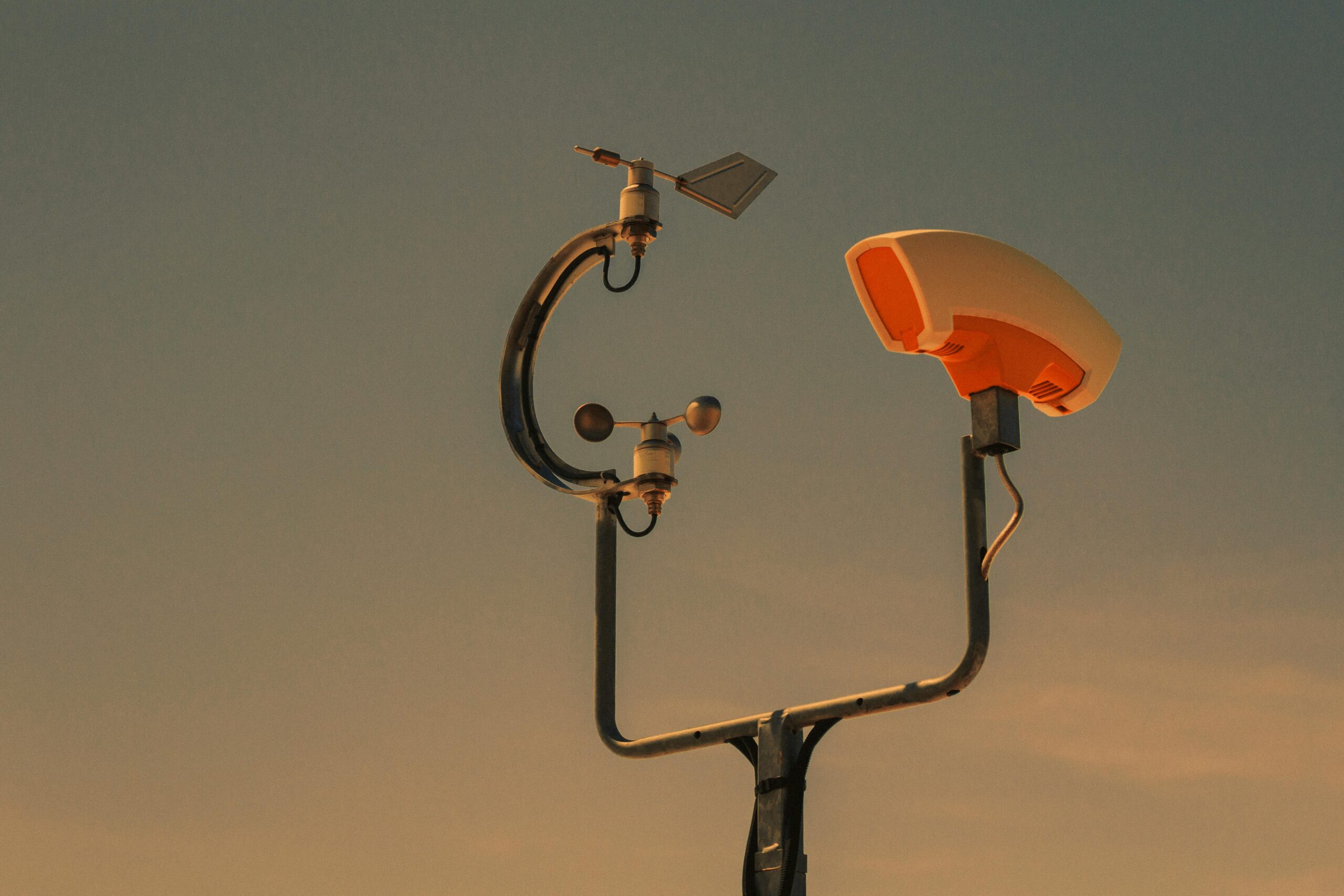
In a world saturated with data streams, distinguishing genuine signals from background interference has become one of the most critical challenges facing modern technology and decision-making processes.

🔍 The Invisible Battle: Signal vs. Noise
Every second, countless sensors across the globe generate massive amounts of data. From smartphones tracking our movements to industrial equipment monitoring production lines, from medical devices measuring vital signs to satellites observing Earth’s climate patterns, sensors have become the eyes and ears of our digital civilization. Yet, within this torrent of information lies a fundamental problem that has plagued scientists, engineers, and analysts since the dawn of measurement technology: sensor noise.
Sensor noise represents the unwanted variation in measurements that obscures the true signal we’re trying to detect. It’s the static that hides the music, the fog that conceals the landscape, the interference that masks reality. Understanding how to navigate through this noise to identify real events isn’t just a technical necessity—it’s an essential skill that determines the reliability of everything from weather forecasts to medical diagnoses, from autonomous vehicle safety to financial market predictions.
Understanding the Nature of Sensor Noise 📊
Before we can unmask the truth hidden within noisy data, we must first understand what we’re dealing with. Sensor noise comes in various forms, each with distinct characteristics and sources. Thermal noise, also known as Johnson-Nyquist noise, arises from the random motion of electrons in electronic components due to temperature. This type of noise is ever-present and increases with temperature, creating a baseline level of uncertainty in virtually all electronic measurements.
Shot noise occurs due to the discrete nature of electric charge. When current flows through a device, individual electrons arrive at random intervals, creating small fluctuations in the measured signal. This phenomenon becomes particularly relevant in low-light imaging and sensitive detection equipment where individual photons or particles matter.
Flicker noise, sometimes called pink noise or one-over-f noise, exhibits a characteristic frequency spectrum where lower frequencies contain more noise power. This type of noise appears in almost all electronic devices and biological systems, making it particularly challenging for applications requiring long-term stability.
Environmental and Systematic Noise Sources
Beyond the inherent noise within sensors themselves, external factors contribute significantly to measurement uncertainty. Electromagnetic interference from nearby electrical equipment, radio transmissions, or power lines can induce spurious signals that contaminate genuine measurements. Mechanical vibrations can affect sensitive instruments, while temperature fluctuations can cause drift in sensor readings over time.
Systematic errors, though technically distinct from random noise, often present similar challenges. Calibration drift, component aging, and environmental dependencies can create patterns that obscure real events or, worse, masquerade as genuine signals when none exist.
🎯 Strategies for Signal Detection and Event Identification
The art and science of extracting real events from noisy sensor data involves a multi-layered approach combining statistical methods, signal processing techniques, and domain-specific knowledge. No single solution fits all scenarios, but several fundamental strategies form the foundation of effective noise management.
Statistical Filtering and Threshold Setting
One of the most straightforward approaches to noise management involves establishing statistical thresholds. By analyzing the noise characteristics during periods when no genuine events occur, we can establish baseline statistics—mean values, standard deviations, and probability distributions. Real events can then be identified when measurements exceed these statistical boundaries by a predetermined margin.
However, setting appropriate thresholds requires careful consideration. Too sensitive a threshold generates false positives, where noise fluctuations are mistaken for real events. Too conservative a threshold risks missing genuine but subtle events. This trade-off, known as the balance between sensitivity and specificity, lies at the heart of detection theory.
Time-Domain Analysis and Pattern Recognition
Real events often exhibit characteristic temporal patterns that distinguish them from random noise. A genuine temperature spike caused by equipment malfunction follows different temporal dynamics than random thermal noise fluctuations. Seismic events create specific wave patterns that differ from background vibrations. By analyzing how signals evolve over time, we can identify signatures that indicate real events.
Moving average filters, median filters, and more sophisticated adaptive filters can smooth out high-frequency noise while preserving the underlying signal trends. These techniques work by averaging multiple measurements over time, reducing the impact of random fluctuations while maintaining responsiveness to genuine changes.
Advanced Signal Processing Techniques 🛠️
As sensor technologies have advanced and computational power has increased, more sophisticated signal processing methods have become practical for real-time applications. These techniques leverage mathematical transformations and machine learning algorithms to extract meaningful information from noisy data streams.
Frequency Domain Analysis
The Fourier transform and its variants allow us to decompose complex signals into their constituent frequency components. This transformation proves invaluable because noise and genuine signals often occupy different regions of the frequency spectrum. Low-pass filters can remove high-frequency noise from slowly varying signals, while band-pass filters can isolate signals within specific frequency ranges where events of interest occur.
Wavelet transforms extend this concept further, providing both time and frequency information simultaneously. This capability proves particularly useful for detecting transient events—brief, localized occurrences that might be lost in traditional frequency analysis or obscured by noise in simple time-domain analysis.
Machine Learning and Artificial Intelligence
Modern machine learning algorithms have revolutionized event detection in noisy environments. Neural networks, particularly deep learning architectures, can learn complex patterns that distinguish genuine events from noise without requiring explicit programming of detection rules. These systems train on labeled datasets containing examples of both real events and noise, gradually learning to recognize subtle features that human analysts might miss.
Anomaly detection algorithms take a different approach, learning the normal pattern of sensor data and flagging deviations as potential events. This method proves especially valuable when real events are rare or when we don’t have comprehensive examples of all possible event types.
💡 Sensor Fusion: Combining Multiple Data Sources
One of the most powerful strategies for cutting through noise involves combining information from multiple sensors. When several independent sensors observe the same phenomenon, the probability that noise will create correlated false signals across all sensors becomes vanishingly small. Genuine events, however, will typically affect multiple sensors in predictable ways.
Kalman filters exemplify this approach, combining predictions based on physical models with actual sensor measurements to produce optimal estimates of system state. These filters account for both measurement noise and uncertainty in the underlying model, continuously updating estimates as new data arrives. Applications range from GPS navigation systems that combine satellite signals with inertial measurements to weather prediction models that integrate data from thousands of sensors worldwide.
Complementary Sensor Technologies
Different sensor technologies exhibit different noise characteristics and sensitivities. Optical sensors might excel at detecting certain phenomena while being vulnerable to ambient light conditions. Radar and acoustic sensors offer different perspectives on the same events. By strategically combining complementary sensor types, we can cross-validate detections and significantly reduce false alarm rates.
🔬 Domain-Specific Challenges and Solutions
The practical implementation of noise management strategies varies dramatically across different application domains, each presenting unique challenges and requiring specialized approaches.
Medical Diagnostics and Patient Monitoring
In healthcare settings, the consequences of missing real events or responding to false alarms can be life-threatening. Electrocardiogram (ECG) monitoring must distinguish between genuine cardiac abnormalities and artifacts from patient movement, electrical interference, or loose electrode connections. Modern monitoring systems employ sophisticated algorithms that analyze signal morphology, temporal patterns, and correlations across multiple leads to minimize false alarms while maintaining high sensitivity to critical events.
Industrial Process Control
Manufacturing environments present extreme challenges with high levels of electromagnetic interference, vibration, and temperature variations. Sensor networks monitoring production lines must reliably detect equipment malfunctions, quality deviations, and safety hazards while avoiding unnecessary shutdowns that cost productivity. Predictive maintenance systems analyze trends in sensor data to identify developing problems before catastrophic failures occur, requiring algorithms that can distinguish gradual degradation signals from normal operational variations and environmental noise.
Environmental Monitoring and Climate Science
Climate scientists face the challenge of detecting long-term trends and extreme events within highly variable natural systems. Temperature records span decades and must account for sensor changes, site relocations, and urban development effects. Separating genuine climate signals from natural variability and measurement noise requires sophisticated statistical methods and extensive validation against independent data sources.
📱 The Role of Edge Computing and Real-Time Processing
Traditional approaches to sensor noise management often involved collecting raw data centrally for processing. However, the explosion in sensor numbers and data rates has made this model increasingly impractical. Edge computing brings processing capabilities closer to sensors, enabling real-time noise filtering and event detection where data originates.
This distributed approach offers several advantages. Reduced data transmission requirements lower power consumption and bandwidth needs—critical factors for battery-powered sensor networks. Real-time processing enables immediate responses to detected events without waiting for cloud-based analysis. Privacy and security improve when sensitive data undergoes initial processing locally, with only filtered results or event notifications transmitted externally.
🌐 Future Directions and Emerging Technologies
The field of sensor noise management continues to evolve rapidly as new technologies emerge and existing methods improve. Quantum sensors promise unprecedented sensitivity for certain measurements, though they introduce new noise sources and management challenges. Neuromorphic computing architectures inspired by biological neural systems offer energy-efficient event-driven processing particularly suited to real-time signal analysis.
Advanced materials and nanotechnology enable sensors with improved signal-to-noise ratios, reducing the noise problem at its source. Optical and photonic sensors provide immunity to electromagnetic interference while offering high bandwidth and sensitivity. Meanwhile, improvements in digital signal processing allow more sophisticated algorithms to run on resource-constrained embedded processors.
The Human Element in Event Validation
Despite remarkable advances in automated detection systems, human expertise remains invaluable for validating events and interpreting ambiguous situations. The most effective systems combine algorithmic detection with human oversight, leveraging the pattern recognition capabilities and contextual understanding that humans excel at while using algorithms to process volumes of data beyond human capacity.
User interface design plays a crucial role in this collaboration. Visualization tools that effectively communicate both detected events and underlying uncertainty help human operators make informed decisions. Alert systems must balance completeness with manageability, providing sufficient information without overwhelming users with false alarms or irrelevant details.
🎓 Practical Guidelines for Implementing Noise Management Systems
Organizations seeking to improve their event detection capabilities should consider several key principles. Begin with thorough characterization of your sensor noise environment through controlled experiments and extended baseline measurements. Understanding your specific noise sources and characteristics enables selection of appropriate countermeasures.
Implement multiple layers of filtering and validation rather than relying on single-stage detection. Cross-validation using independent sensors or methods provides confidence that detected events are genuine. Maintain clear documentation of detection algorithms, threshold settings, and validation procedures to enable continuous improvement and troubleshooting.
Regularly review system performance through metrics like false alarm rates, missed detection rates, and detection latency. Collect feedback from end users about system effectiveness and usability. Use this information to refine algorithms and tune parameters as conditions change over time.

🔮 Embracing Uncertainty While Pursuing Truth
The quest to unmask truth within noisy sensor data ultimately requires accepting that perfect certainty remains unattainable. Every detection system operates within a framework of probabilities, balancing the risks of false alarms against the dangers of missed events. The goal isn’t elimination of all uncertainty but rather managing it effectively to enable confident decision-making.
Transparent communication about uncertainty levels helps stakeholders understand the limitations and reliability of detection systems. Probabilistic forecasts and confidence intervals provide more complete information than binary yes/no decisions. Scenario analysis exploring how decisions might change under different assumptions acknowledges uncertainty while still enabling action.
As sensor technologies proliferate and data volumes grow, the challenge of distinguishing real events from noise will only intensify. Success requires combining technical sophistication with clear thinking about objectives, risks, and acceptable trade-offs. By embracing robust methodologies, learning from experience, and maintaining healthy skepticism about both detections and non-detections, we can navigate through sensor noise to identify the real events that matter, unveiling truth from the chaos of data that surrounds us.