
Balancing is a fundamental skill that influences everything from athletic performance to everyday movements, yet achieving true stability remains a challenge for many.

Whether you’re an athlete perfecting your stance, a fitness enthusiast working on coordination, or someone recovering from injury, understanding how to prevent oscillations and instability is crucial for success. The human body constantly makes micro-adjustments to maintain equilibrium, but excessive wobbling and uncontrolled movements can hinder performance and increase injury risk. This comprehensive guide will explore the science behind stability, practical techniques for improvement, and strategic approaches to mastering the art of balanced movement.
🎯 Understanding the Science Behind Balance and Stability
Balance involves a complex interplay between your visual system, vestibular apparatus in the inner ear, and proprioceptive sensors throughout your body. These three systems work together to provide your brain with constant feedback about your position in space. When any of these systems receives conflicting information or fails to communicate effectively, oscillations occur as your body struggles to find its center of gravity.
The center of mass in your body typically sits around your pelvis area, and maintaining it over your base of support is the primary goal of balance. When this alignment shifts, your nervous system triggers corrective responses, which can sometimes be too aggressive, creating a pendulum effect that amplifies rather than reduces instability.
Proprioception, often called the sixth sense, plays a particularly vital role in preventing excessive oscillations. These specialized nerve endings in your muscles, tendons, and joints constantly monitor tension and position, sending signals to your brain about where your body parts are without needing visual confirmation. Improving proprioceptive awareness is one of the most effective strategies for achieving rock-solid stability.
🧠 The Neurological Factors Contributing to Instability
Your nervous system’s response time significantly impacts your ability to maintain balance. As we age or remain sedentary, these neural pathways can become less efficient, leading to delayed corrective responses that result in overcorrection and wobbling. The good news is that these pathways exhibit remarkable plasticity and can be retrained through consistent practice.
Motor control patterns established in your cerebellum determine how smoothly you make balance adjustments. When these patterns are underdeveloped or disrupted, your movements become jerky and uncoordinated. This manifests as visible oscillations when attempting to hold static positions or perform dynamic movements requiring equilibrium.
Anxiety and mental tension also contribute to instability by creating unnecessary muscle activation. When you’re nervous about falling or failing, your muscles tense up in patterns that actually decrease stability rather than enhance it. Learning to relax while maintaining appropriate muscle activation is a subtle but essential skill.
💪 Building a Foundation of Core Strength
Core stability forms the foundation for all balanced movements. Your core muscles act as a muscular corset that stabilizes your spine and pelvis, providing a solid platform from which your limbs can move. Weakness in these muscles forces your body to use inefficient compensatory strategies that increase oscillations.
Deep stabilizer muscles like the transverse abdominis, multifidus, and pelvic floor work differently than superficial muscles. They activate with low intensity but high endurance, providing sustained support rather than powerful movements. Training these muscles requires specific exercises that emphasize control over strength.
Effective core exercises for stability include planks with variations, dead bugs, bird dogs, and Pallof presses. The key is performing these movements with minimal extraneous motion, focusing on maintaining a neutral spine position while breathing naturally. Quality always trumps quantity when developing stabilization strength.
👣 Optimizing Your Base of Support
The relationship between your base of support and center of mass determines stability levels. A wider base provides more stability but reduces mobility, while a narrower base increases challenge but allows greater movement freedom. Understanding how to adjust your base appropriately for different activities prevents unnecessary instability.
Foot placement matters tremendously in creating stable foundations. Your feet contain numerous proprioceptive sensors that provide crucial feedback about ground conditions and weight distribution. Developing better foot awareness and strength through barefoot training or specific foot exercises can dramatically improve overall balance.
Weight distribution across your feet should typically favor a tripod position: pressure distributed evenly between the heel, big toe base, and little toe base. Many people collapse their arches or shift weight excessively to the outside edges, creating unstable platforms that trigger compensatory oscillations up the kinetic chain.
🔄 Progressive Training Strategies for Stability
Improving balance requires progressive overload just like strength training. Starting with easier variations and systematically increasing difficulty allows your nervous system to adapt without becoming overwhelmed. This methodical approach builds confidence while reducing injury risk.
A logical progression might follow this sequence:
- Static bilateral stance on stable surfaces with eyes open
- Static bilateral stance on stable surfaces with eyes closed
- Static unilateral stance on stable surfaces with eyes open
- Static unilateral stance with reduced visual input
- Dynamic movements on stable surfaces
- Static positions on unstable surfaces
- Dynamic movements on unstable surfaces
- Sport-specific balance challenges
Each level should be mastered before progressing to the next. Mastery means holding positions for 30-60 seconds with minimal visible oscillation and feeling confident rather than anxious. Rushing through progressions often leads to plateaus and frustration.
⏱️ The Role of Time and Practice Frequency
Balance training benefits significantly from frequent, shorter sessions rather than infrequent long workouts. Your nervous system adapts best to regular exposure, making 10-15 minutes daily more effective than one hour-long session weekly. This frequency allows for neural consolidation without excessive fatigue.
The quality of practice matters more than duration. Fatigued practice with poor form reinforces bad movement patterns rather than building stability. When you notice your form deteriorating significantly or oscillations increasing dramatically, it’s time to rest rather than push through.
Consistency over weeks and months produces the most dramatic improvements. Unlike strength gains that can develop relatively quickly, balance adaptations involve complex neural rewiring that requires patient, persistent effort. Most people notice meaningful improvements within 4-6 weeks of dedicated practice.
🎯 Visual Focus Techniques for Enhanced Stability
Where you direct your gaze profoundly impacts balance control. Fixing your eyes on a stationary point at eye level provides your visual system with stable reference information that helps anchor your body position. Conversely, moving your eyes around while attempting to balance creates conflicting sensory input that increases oscillations.
Soft focus techniques borrowed from martial arts and yoga can enhance stability during dynamic movements. Rather than staring intensely at a single point, you maintain awareness of a broader visual field while keeping your gaze direction steady. This approach provides environmental awareness without sacrificing the stabilizing benefits of visual fixation.
Training with reduced visual input challenges your vestibular and proprioceptive systems to compensate, ultimately making them more reliable. Closing your eyes during balance exercises forces these non-visual systems to work harder, creating adaptation that carries over to eyes-open situations.
🧘 Breathing Patterns and Their Impact on Stability
Breath-holding during balance attempts is a common mistake that increases tension and reduces stability. Your diaphragm plays a dual role in both respiration and core stabilization, and holding your breath disrupts this balance. Learning to breathe naturally while maintaining core engagement is essential for sustained stability.
Diaphragmatic breathing specifically supports stability by creating intra-abdominal pressure that acts like a pneumatic support system for your spine. This breathing pattern involves expanding your belly on inhales rather than raising your shoulders, creating a stable pressure system that reduces spinal oscillations.
Rhythmic breathing patterns can also help reduce anxiety-driven tension that compromises balance. Establishing a steady breathing rhythm creates a meditative focus that calms your nervous system while providing a consistent internal reference point for movement timing.
📱 Technology and Tools for Balance Training
Various equipment options can enhance balance training when used appropriately. Foam pads, balance boards, BOSU balls, and stability discs create unstable surfaces that challenge your equilibrium systems. However, these tools should be introduced gradually after establishing solid ground-level balance skills.
Mobile applications designed for balance training can provide structured progressions, timing tools, and tracking capabilities that support consistent practice. These digital resources make it easier to follow evidence-based protocols and monitor improvement over time, though they should complement rather than replace professional guidance when needed.
Wearable sensors and force plate technology, once limited to research laboratories, are becoming increasingly accessible for tracking balance metrics. These devices can quantify oscillation amplitude, center of pressure movement, and other objective measures that help identify specific weaknesses and track progress accurately.
⚡ Dynamic Stability: Moving Beyond Static Balance
Static balance represents just one dimension of stability. Most real-world activities require dynamic balance—maintaining equilibrium during movement. This skill involves anticipatory postural adjustments where your nervous system predicts destabilizing forces and activates stabilizing muscles before movement occurs.
Transitional movements present particular challenges because they involve changing your base of support and center of mass simultaneously. Practicing movements like step-ups, lunges, and gait variations with focus on smooth, controlled transitions builds the dynamic stability needed for daily life and athletic performance.
Reactive balance training involves responding to unexpected perturbations or unstable surfaces. This type of practice develops the reflexive responses needed to prevent falls when encountering real-world challenges like uneven terrain, sudden obstacles, or external forces from sports contact.
🎨 Sport-Specific Balance Applications
Different activities demand unique stability requirements. Gymnasts need extreme static balance on narrow beams, while soccer players require dynamic stability during rapid direction changes. Surfers must constantly adjust to moving platforms, and climbers need controlled strength throughout extended ranges of motion.
Analyzing the specific balance demands of your chosen activity helps focus training efforts appropriately. A runner benefits more from single-leg dynamic stability exercises than from extensive BOSU ball training, while a yoga practitioner needs different skills than a basketball player.
Cross-training with varied balance challenges develops a broader foundation of stability skills that transfer across activities. Even if you specialize in one sport, incorporating diverse balance stimuli prevents adaptation plateaus and reduces overuse injury risks from repetitive movement patterns.
🏥 Addressing Common Balance Disorders and Limitations
Certain medical conditions specifically affect balance systems and may require specialized interventions. Vestibular disorders, peripheral neuropathy, vision problems, and neurological conditions all create unique challenges that benefit from targeted rehabilitation rather than generic balance exercises.
Working with physical therapists or balance specialists is crucial when dealing with pathological instability rather than simple skill deficits. These professionals can identify specific system impairments and design interventions that address root causes rather than just symptoms.
Medication side effects sometimes contribute to balance problems through mechanisms like blood pressure changes, dizziness, or altered proprioception. If you experience sudden balance changes, reviewing your medications with healthcare providers should be part of a comprehensive assessment.
🌟 Mental Strategies for Confidence and Control
Fear of falling creates a self-fulfilling prophecy where anxiety-driven tension increases instability. Building psychological confidence through graduated exposure to challenging balance situations helps break this cycle. Starting with positions where falling consequences are minimal allows you to develop comfort with the sensation of instability.
Visualization and mental rehearsal techniques borrowed from sports psychology enhance balance performance. Mentally practicing stable positions activates similar neural pathways as physical practice, providing supplementary training that reinforces motor patterns and builds confidence.
Mindfulness approaches that emphasize present-moment awareness reduce the mental chatter that interferes with automatic balance responses. When you stop overthinking and trust your body’s innate balance mechanisms, stability often improves dramatically without any physical training changes.
🔬 Advanced Concepts: Stiffness Versus Flexibility
Counterintuitively, some degree of controlled stiffness enhances stability more than excessive flexibility. Your body needs to create rigid segments at strategic times to provide stable platforms for movement. The key is developing variable stiffness—the ability to modulate tension levels appropriately for different situations.
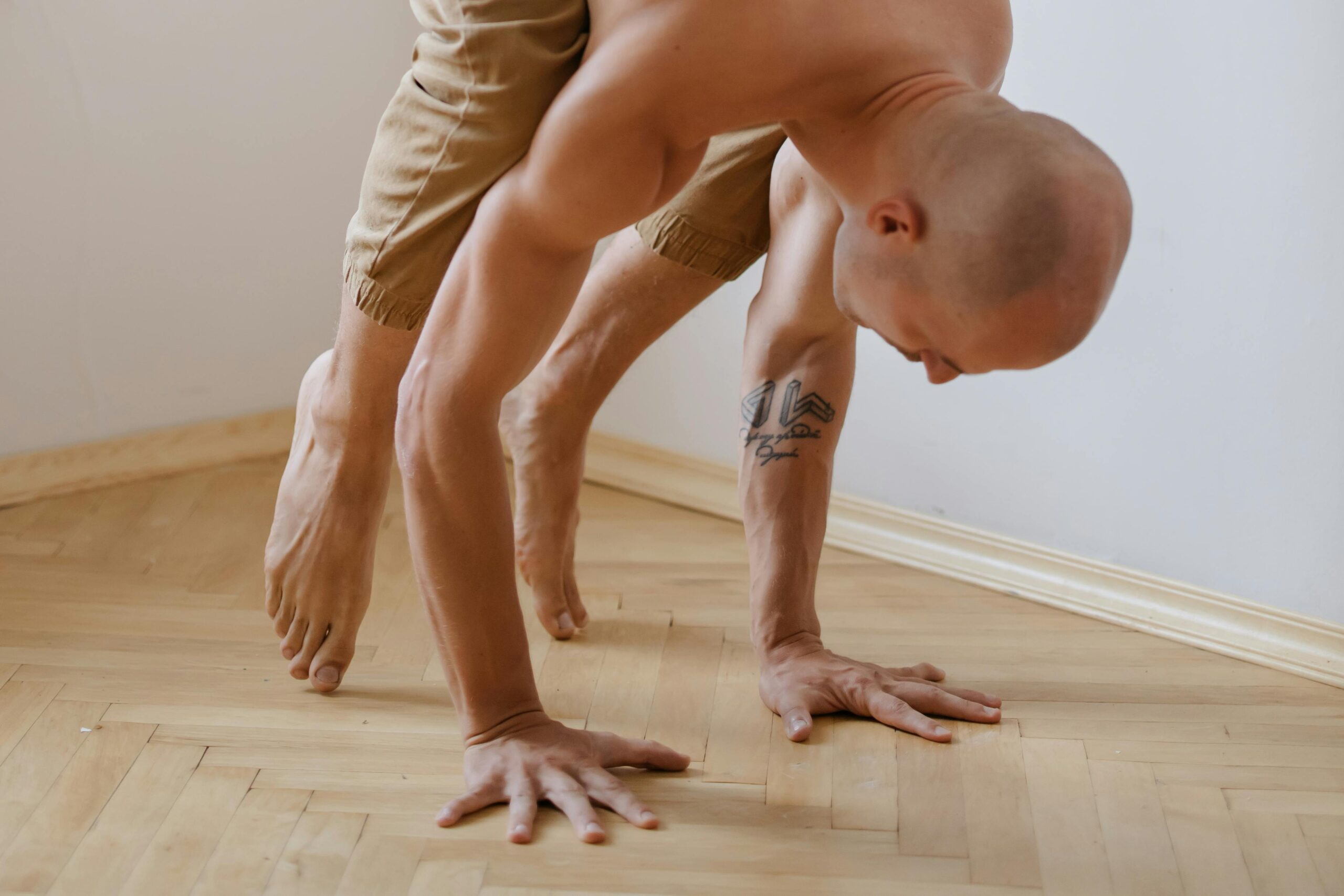
Joint mobility must be balanced with motor control. Hypermobile individuals often struggle with stability because they have excessive range of motion without sufficient neuromuscular control throughout those ranges. For these people, stability training takes precedence over flexibility work.
The concept of “active mobility” combines flexibility with stability by emphasizing controlled movement through ranges rather than passive stretching. This approach develops both the range of motion and the strength to control that range, creating functional stability rather than just flexibility.
🎓 Long-Term Maintenance and Progression
Balance abilities follow a “use it or lose it” principle. Even after achieving excellent stability, these skills require ongoing practice to maintain. Building balance work into your regular routine as a permanent component rather than a temporary focus ensures continued benefits.
As your balance improves, continually introducing novel challenges prevents plateaus and maintains adaptation stimulus. This might involve new equipment, different movement patterns, or increased complexity in exercises you’ve mastered. The human nervous system thrives on novelty and variability.
Periodic reassessment helps identify areas needing attention and demonstrates progress. Simple tests like timed single-leg stands, tandem walking, or sport-specific balance challenges provide objective measures that motivate continued effort and inform training adjustments.
Mastering stability and preventing oscillations represents a journey rather than a destination. The principles outlined here provide a comprehensive framework for developing rock-solid balance through systematic training of your physical, neurological, and psychological systems. By understanding the science behind stability, implementing progressive training strategies, and maintaining consistent practice, you can transform shaky, unstable movements into confident, controlled performance. Remember that everyone starts at different levels and progresses at individual rates—what matters most is the commitment to steady improvement rather than comparison with others. Whether your goal is injury prevention, athletic performance, or simply moving through daily life with greater confidence, the investment in balance training pays dividends across all aspects of physical function. Start where you are, progress methodically, and trust the process as your nervous system adapts and your stability naturally improves. 🌟