Citizen weather data is transforming how we understand and map our environment, offering unprecedented precision for planning, forecasting, and decision-making across industries.

🌦️ The Dawn of Hyperlocal Weather Intelligence
Traditional weather monitoring has long relied on networks of government-operated stations, satellites, and radar systems. While these infrastructure investments have served us well, they share a common limitation: sparse geographic coverage. Official weather stations are typically spaced miles apart, creating significant gaps in data resolution. This is where citizen weather networks are revolutionizing the landscape.
Citizen weather stations—personal weather monitoring devices installed by individuals, schools, businesses, and community organizations—are filling these gaps with remarkable density. In many urban and suburban areas, these stations now outnumber official monitoring sites by factors of ten or even hundred to one. This unprecedented density translates directly into higher-resolution data that captures microclimatic variations invisible to traditional networks.
The implications extend far beyond satisfying curiosity about neighborhood conditions. High-resolution weather data enables precision agriculture, optimized logistics, enhanced emergency response, smarter urban planning, and more accurate localized forecasting. Organizations that integrate citizen weather data into their mapping and analytical workflows gain competitive advantages through insights their competitors simply cannot access.
Understanding the Citizen Weather Revolution
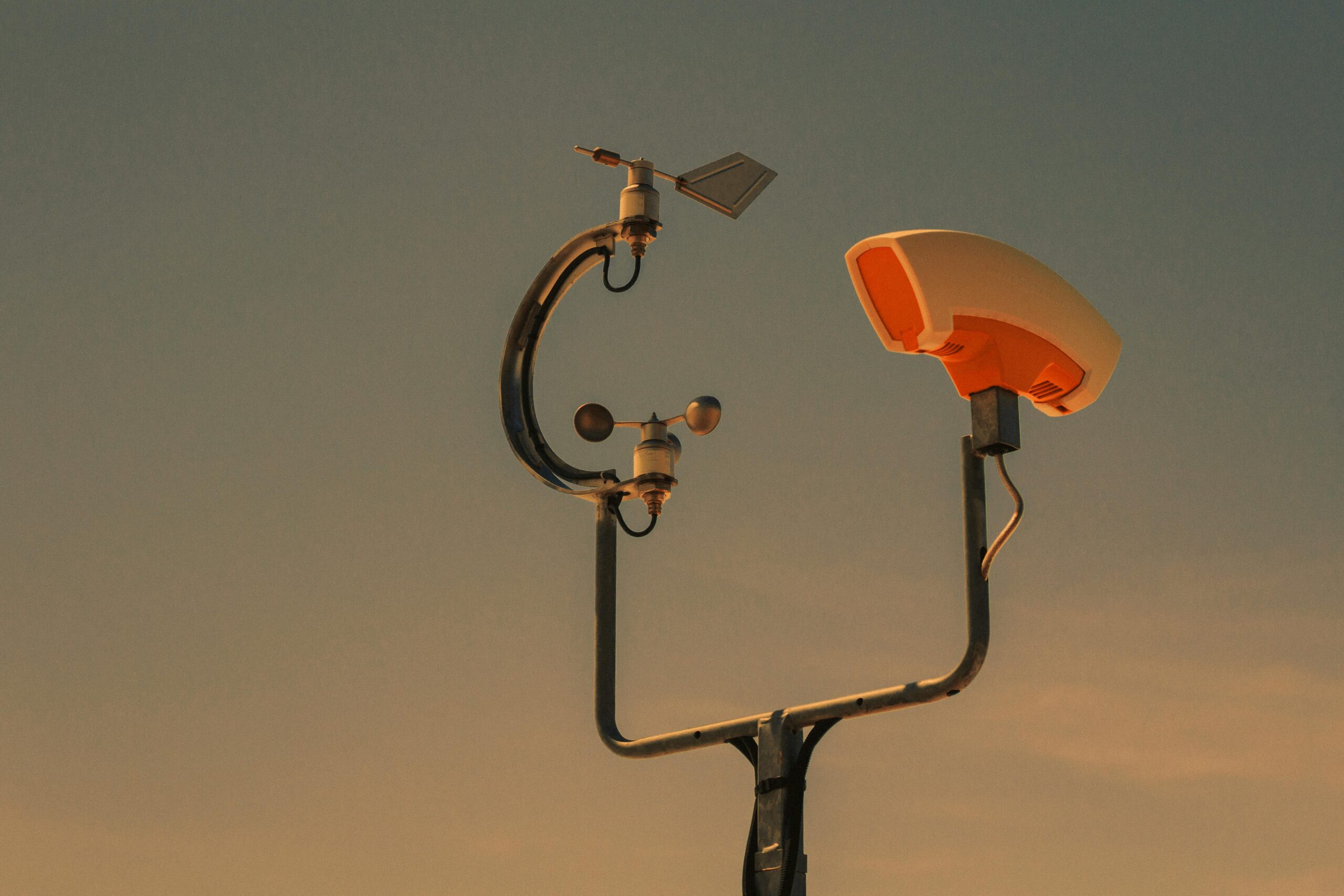
The proliferation of affordable personal weather stations has democratized meteorological observation. Devices that once cost thousands of dollars are now available for a few hundred, equipped with sensors measuring temperature, humidity, barometric pressure, wind speed and direction, rainfall, and even UV radiation and air quality.
These stations typically connect to the internet, automatically uploading observations to aggregation platforms like Weather Underground, Netatmo, Ambient Weather Network, and PWS Weather. These platforms validate, quality-control, and redistribute the data through APIs, making millions of observations accessible to researchers, businesses, and application developers.
The quality of citizen weather data has improved dramatically. Modern consumer stations employ calibrated sensors with accuracy approaching professional-grade equipment. Aggregation platforms apply sophisticated algorithms to identify and filter erroneous readings, ensuring data integrity. While individual stations may occasionally produce questionable data, the density of networks means multiple nearby stations provide cross-validation.
📍 High-Resolution Mapping Applications That Matter
The true value of citizen weather data emerges when integrated into mapping platforms and geographic information systems. This fusion of meteorological observations with spatial analysis unlocks applications across numerous sectors.
Precision Agriculture and Farm Management
Agriculture has embraced precision techniques that optimize inputs field by field, or even within individual fields. Irrigation scheduling, frost protection, disease management, and harvest timing all depend on accurate weather information. A single weather station miles away cannot capture the microclimate variations across a farm, but a network of citizen stations surrounding agricultural areas provides the granularity farmers need.
Forward-thinking agricultural operations overlay citizen weather data onto field maps, creating dynamic weather layers that inform real-time decisions. This approach reduces water waste, minimizes pesticide application, protects crops from weather damage, and ultimately improves yields and profitability.
Urban Heat Island Analysis and Mitigation
Cities create their own microclimates, with temperature variations of 10°F or more between neighborhoods based on factors like vegetation cover, building density, and pavement extent. These urban heat islands disproportionately affect vulnerable populations and drive energy consumption.
Citizen weather networks provide the temperature data density needed to map heat islands accurately. Urban planners use these maps to identify priority areas for tree planting, green infrastructure investment, and cooling center placement. The result is more equitable, climate-resilient urban environments designed with data-driven precision.
Transportation and Logistics Optimization
Weather conditions dramatically impact transportation safety and efficiency. Fog, ice, flooding, and wind affect different routes differently. Fleet operators, delivery services, and transportation agencies increasingly integrate hyperlocal weather data into routing algorithms.
By mapping current and forecasted conditions at high resolution, logistics systems can dynamically reroute vehicles around hazardous conditions, optimize delivery schedules, and improve driver safety. The economic benefits from reduced accidents, faster deliveries, and better fuel efficiency quickly justify the technology investment.
Emergency Management and Public Safety
During severe weather events, every minute counts. Emergency managers need to know precisely which neighborhoods face flooding, where temperatures threaten vulnerable populations, and how conditions are evolving. Citizen weather data provides this situational awareness at neighborhood scale.
Progressive emergency management agencies overlay real-time citizen weather observations onto emergency operations maps. This integration enables targeted warnings, efficient resource deployment, and faster response to developing situations. Lives are saved when decisions are based on hyperlocal data rather than regional averages.
🔧 Integrating Citizen Weather Data Into Your Workflow
Accessing and utilizing citizen weather data requires understanding the technical landscape and available tools. Several pathways exist depending on technical capabilities and specific needs.
Direct API Integration
Organizations with development resources can integrate weather data directly through APIs provided by aggregation platforms. Weather Underground, Ambient Weather, and other networks offer API access with varying terms and pricing structures. This approach provides maximum flexibility and customization but requires programming expertise.
APIs typically allow querying by location, retrieving observations from nearby stations, and accessing historical data. Developers can build custom mapping applications that overlay weather observations on geographic layers, create animated visualizations showing weather patterns over time, and integrate weather data into existing business intelligence platforms.
Third-Party Platforms and Applications
Numerous applications and platforms have emerged to make citizen weather data accessible to non-technical users. These tools provide pre-built visualizations, mapping interfaces, and analytical capabilities without requiring custom development.
Weather mapping applications designed for specific industries—agriculture, construction, event planning—incorporate citizen weather networks alongside traditional data sources. Users benefit from professional-grade functionality without the complexity of building systems from scratch.
GIS Integration Strategies
Geographic Information Systems like ArcGIS and QGIS are natural platforms for working with spatially-distributed weather data. Weather observations can be imported as point features with attributes for temperature, precipitation, and other variables.
GIS analysts can then apply spatial interpolation techniques to create continuous weather surfaces from point observations. Kriging, inverse distance weighting, and spline methods transform discrete station data into raster layers showing estimated conditions across entire areas. These surfaces integrate seamlessly with other geographic data for sophisticated multi-layer analysis.
⚡ Overcoming Data Quality and Integration Challenges
While citizen weather networks offer tremendous benefits, they present challenges that must be addressed for reliable results. Understanding these issues and implementing appropriate solutions ensures data integrity.
Station Siting and Exposure Problems
Not all citizen weather stations are ideally located. Some sit on sun-baked rooftops, others in artificially cooled microclimates near air conditioning units, and still others sheltered by buildings blocking wind. These siting issues can produce observations that don’t represent broader area conditions.
Quality assurance protocols help identify problematic stations. Comparing each station against nearby neighbors reveals outliers. Spatial consistency checks flag stations reporting values significantly different from surrounding locations. Over time, unreliable stations can be identified and excluded from analyses.
Data Gaps and Missing Observations
Internet connectivity issues, power outages, and maintenance lapses cause citizen stations to occasionally go offline. Unlike professionally maintained networks with backup systems and routine service, citizen stations may experience extended data gaps.
Robust analytical workflows account for missing data through spatial and temporal interpolation. When a station goes offline, observations from nearby functioning stations fill the gap. Time-series analysis can also estimate missing values based on historical patterns and current regional conditions.
Calibration Drift and Sensor Aging
Weather sensors degrade over time. Temperature sensors may drift, rain gauges clog, and anemometers bind. Without regular professional calibration, accuracy slowly degrades.
Comparative analysis against nearby stations and official sources helps detect calibration issues. Stations showing systematic bias—consistently reading high or low compared to neighbors—can be flagged for potential calibration problems. Some platforms apply automated bias correction algorithms to adjust questionable data.
🌍 Real-World Success Stories and Case Studies
Organizations across sectors are already realizing substantial benefits from integrating citizen weather data into their operations. These examples illustrate practical applications and measurable outcomes.
Municipal Water Management
A progressive water utility in the southwestern United States faced challenges optimizing irrigation recommendations for residential customers. A single weather station at the airport didn’t capture neighborhood-level rainfall and temperature variations across their service area.
By incorporating data from over 200 citizen weather stations within their service territory, the utility developed neighborhood-specific irrigation schedules. Customers received recommendations based on hyperlocal conditions rather than generic regional guidelines. The program reduced residential water consumption by 18% while maintaining landscape health, saving millions of gallons annually.
Agricultural Cooperative Frost Protection
A fruit growers’ cooperative struggled with frost protection decisions that affected hundreds of farms across a region. Cold air drainage patterns created significant temperature variations, with some orchards experiencing frost while others remained safe.
The cooperative integrated citizen weather station data with topographic mapping to create real-time frost risk maps. Growers accessed these maps through a mobile application showing current temperatures at their specific locations and predictions for the coming hours. This hyperlocal intelligence improved frost protection timing, reduced unnecessary heating costs, and minimized crop losses from late-season freezes.
Transportation Authority Road Treatment Optimization
A state transportation department managed snow and ice control across thousands of miles of roads. Traditional weather information didn’t capture the variation in conditions across their network, leading to over-treatment in some areas and under-treatment in others.
By mapping citizen weather observations onto their road network, dispatchers gained visibility into conditions at segment level. Snowplow routes were optimized based on actual accumulation rather than predictions. Salt application rates were adjusted for measured temperatures. The result was a 22% reduction in material costs, improved road conditions, and enhanced public safety.
🚀 Future Horizons: Where Citizen Weather Data Is Heading
The citizen weather revolution is still in its early stages. Emerging technologies and methodologies promise even greater capabilities in the years ahead.
Integration with IoT and Smart City Infrastructure
As cities deploy comprehensive sensor networks for traffic, air quality, and infrastructure monitoring, weather observations will become standard data streams. Smart light poles, connected vehicles, and building management systems will all contribute weather observations, creating data density orders of magnitude beyond today’s networks.
This integration will enable real-time, block-by-block weather mapping with unprecedented resolution. Urban microclimates will be continuously monitored, supporting everything from automated building climate control to personalized outdoor activity recommendations.
Machine Learning and Predictive Analytics
Artificial intelligence excels at finding patterns in massive, complex datasets—exactly what high-resolution citizen weather networks produce. Machine learning models are being trained to predict hyperlocal conditions hours ahead based on current observations, historical patterns, and broader meteorological context.
These AI-powered forecasts will eventually surpass traditional numerical weather prediction for short-term, small-area applications. A farmer will know with high confidence whether their specific field will receive rain in the next two hours. A event planner will receive accurate predictions for their venue location, not just the broader region.
Crowdsourced Observation Expansion
Beyond fixed weather stations, mobile observations from vehicles, smartphones, and wearables will add temporal and spatial dimensions to weather mapping. Your car already knows outside temperature; imagine millions of vehicles contributing observations as they travel, creating dynamic temperature maps updated continuously.
Crowdsourcing platforms are emerging to collect subjective weather observations—visibility reports, precipitation type confirmations, and localized severe weather sightings. These human observations complement sensor data, providing context and verification that automated systems alone cannot achieve.
💡 Getting Started: Practical Steps for Implementation
Organizations ready to harness citizen weather data should approach implementation systematically, starting with clear objectives and building capabilities progressively.
Begin by defining specific use cases and success metrics. What decisions will weather data inform? How will you measure improvement? Clear objectives guide technology selection and implementation priorities.
Assess available data sources relevant to your geography. Different regions have varying citizen station density. Evaluate coverage in your area of interest and identify gaps that might require supplemental data sources.
Start with pilot projects of limited scope. Test data quality, validate against known conditions, and refine integration workflows. Small-scale success builds confidence and organizational support for broader deployment.
Invest in visualization capabilities that make weather data accessible to decision-makers. Maps, dashboards, and alerts transform raw data into actionable intelligence. User-friendly interfaces encourage adoption and maximize value realization.
Establish data governance protocols addressing quality assurance, archiving, and compliance requirements. Weather data may support regulatory reporting, legal proceedings, or financial decisions, requiring appropriate documentation and quality standards.
🎯 Maximizing Value Through Strategic Application
The organizations gaining greatest value from citizen weather data share common characteristics: they integrate weather information deeply into operational processes, they invest in people and systems to exploit the data, and they continuously refine their approaches based on results.
Weather data becomes most valuable when embedded into automated systems that act on observations without human intervention. Irrigation controllers adjusting based on real-time conditions, logistics systems rerouting around hazards, and building management systems optimizing HVAC all deliver value continuously without ongoing manual effort.
Cross-functional collaboration amplifies benefits. When operations, planning, IT, and analytics teams work together, weather data enriches multiple processes simultaneously. The infrastructure investment serves numerous applications, accelerating return on investment.
Finally, organizations that contribute to citizen weather networks while utilizing them create positive feedback loops. Installing quality weather stations in strategic locations improves data coverage for everyone while ensuring you have observations exactly where you need them most.
The convergence of affordable sensing technology, ubiquitous connectivity, and sophisticated analytics has created unprecedented opportunities to understand and respond to weather at hyperlocal scales. Citizen weather networks are no longer experimental curiosities but essential infrastructure for data-driven decision-making. Organizations that recognize this transformation and integrate high-resolution weather intelligence into their mapping and planning workflows position themselves for success in an increasingly weather-sensitive world. The question is no longer whether to embrace citizen weather data, but how quickly you can harness its transformative potential for your specific challenges and opportunities.