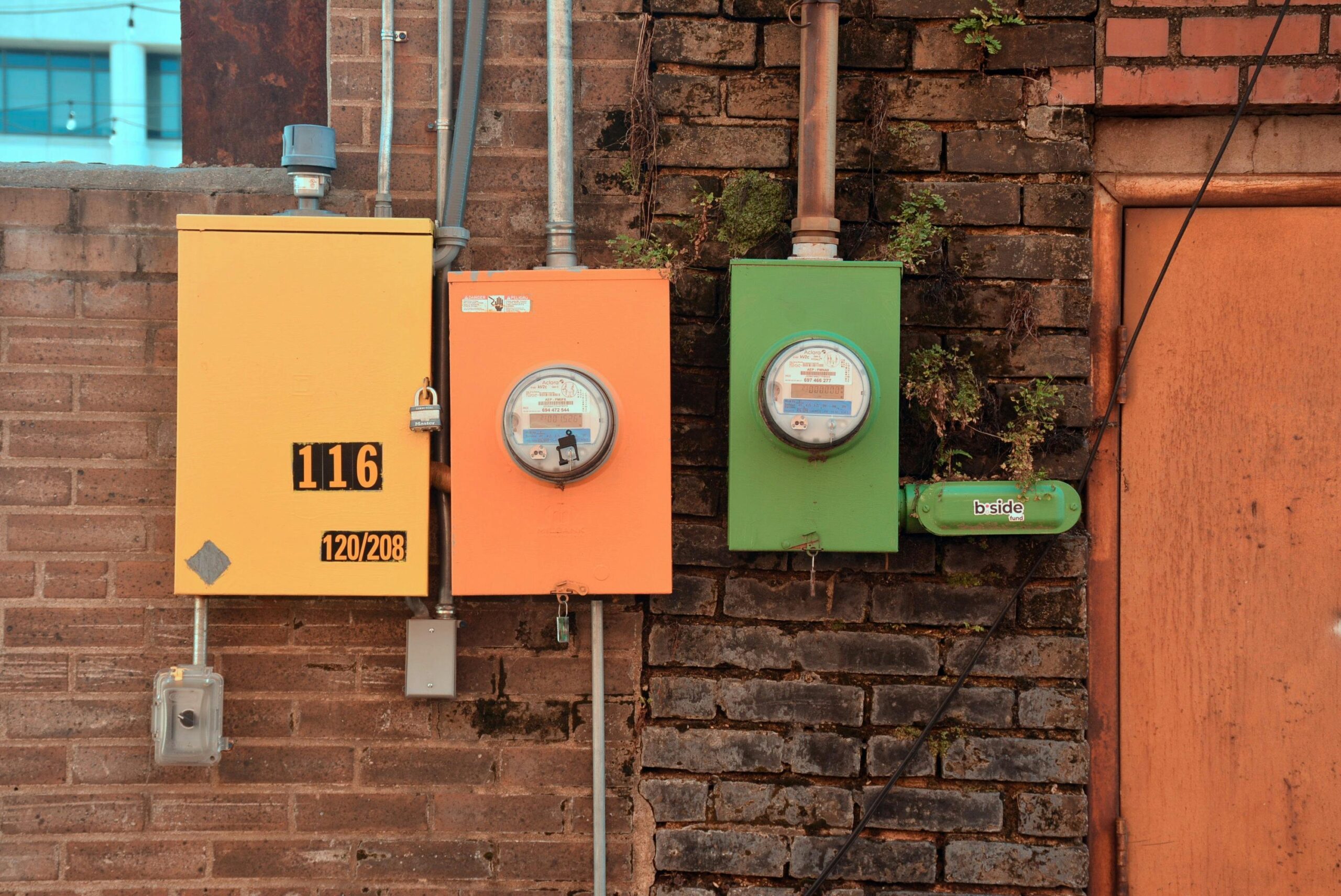
Modern campuses and microgrids are transforming how we generate, distribute, and consume energy through intelligent forecasting systems that predict demand patterns and optimize renewable resources.

🔋 The Revolution of Campus Energy Management
Universities and corporate campuses consume massive amounts of electricity daily, making them ideal candidates for microgrid implementation. These self-contained energy systems can operate independently or in conjunction with the main power grid, offering unprecedented control over energy distribution and consumption. The key to maximizing efficiency lies in accurately forecasting energy events before they occur.
Event forecasting in microgrids involves predicting peak demand periods, renewable energy generation fluctuations, equipment failures, and grid disturbances. By anticipating these events, campus administrators can make proactive decisions that reduce costs, minimize carbon footprints, and ensure uninterrupted power supply to critical facilities.
The integration of artificial intelligence and machine learning algorithms has revolutionized how we approach energy forecasting. These technologies analyze historical data, weather patterns, occupancy schedules, and seasonal trends to create predictive models with remarkable accuracy. This predictive capability transforms reactive energy management into a proactive strategic advantage.
Understanding Microgrid Architecture for Modern Campuses
A campus microgrid typically consists of distributed energy resources including solar panels, wind turbines, energy storage systems, and conventional backup generators. These components work together to create a resilient energy ecosystem that can adapt to changing conditions in real-time.
The control system serves as the brain of the microgrid, continuously monitoring energy production, consumption, and storage levels. Advanced sensors throughout the campus feed data into centralized management platforms that make split-second decisions about energy routing and distribution. This intelligent coordination ensures optimal performance while maintaining system stability.
Energy storage systems, particularly lithium-ion batteries, play a crucial role in balancing supply and demand. These batteries store excess renewable energy during low-demand periods and release it when needed, smoothing out the inherent variability of solar and wind power. The effectiveness of this storage depends heavily on accurate forecasting of both generation and consumption patterns.
Key Components of Forecasting Infrastructure
Building an effective forecasting system requires multiple layers of technology working in harmony. Smart meters installed throughout the campus collect granular consumption data at 15-minute intervals or less, providing the foundation for accurate predictions. Weather stations and online meteorological services supply real-time and forecasted weather data that directly impacts renewable energy generation.
Cloud-based analytics platforms process this vast amount of data using sophisticated algorithms. These platforms employ various forecasting techniques including time-series analysis, neural networks, and ensemble methods that combine multiple models for improved accuracy. The computational power of modern cloud infrastructure enables these complex calculations to occur in near real-time.
Visualization dashboards present forecasting data in intuitive formats that facilities managers can quickly understand and act upon. Color-coded alerts highlight potential issues before they become critical, while trend graphs show predicted consumption and generation over various time horizons from hours to weeks ahead.
⚡ Strategic Approaches to Energy Event Forecasting
Short-term forecasting focuses on predicting energy events within the next 24 to 72 hours. This timeframe is critical for operational decision-making such as scheduling maintenance, adjusting HVAC systems, and determining when to charge or discharge battery storage. Accuracy in this range directly translates to cost savings and system reliability.
Medium-term forecasting extends from several days to several weeks ahead. This horizon allows campus planners to coordinate with utility providers, schedule campus events around energy availability, and optimize procurement of supplemental power when needed. Universities can align academic calendars and special events with periods of high renewable energy availability.
Long-term forecasting spans months to years and informs capital investment decisions. Predicting seasonal patterns and multi-year trends helps determine when to expand solar installations, upgrade battery capacity, or retrofit buildings for better energy efficiency. These strategic investments require confidence in long-range forecasting models.
Machine Learning Models Driving Accuracy
Artificial neural networks have proven exceptionally effective at identifying complex patterns in energy consumption data. These models learn from historical patterns and continuously improve their predictions as new data becomes available. Deep learning approaches can capture subtle relationships between variables that traditional statistical methods might miss.
Random forest and gradient boosting algorithms offer another powerful approach, particularly for handling the non-linear relationships common in energy systems. These ensemble methods combine multiple decision trees to create robust predictions that are less susceptible to overfitting and can handle missing data gracefully.
Support vector machines excel at classification tasks such as predicting whether a particular day will experience peak demand or identifying anomalous consumption patterns that might indicate equipment malfunction. Combining classification with regression models creates comprehensive forecasting systems that address multiple prediction needs simultaneously.
🌞 Renewable Energy Integration and Prediction Challenges
Solar power generation depends heavily on weather conditions, making accurate forecasting both critical and challenging. Cloud cover, atmospheric particulates, and seasonal variations in sun angle all affect output. Advanced forecasting systems incorporate satellite imagery and numerical weather prediction models to anticipate generation fluctuations hours or days in advance.
Wind energy presents similar challenges with additional complexity from local topography and atmospheric conditions at different altitudes. Campus microgrids with wind turbines require sophisticated models that account for wind speed, direction, and turbulence characteristics. Combining historical site data with regional weather forecasts improves prediction accuracy significantly.
The intermittency of renewable sources necessitates careful coordination between generation forecasts and demand predictions. When models predict a mismatch between renewable supply and campus demand, the system can automatically adjust by modifying building temperatures, scheduling battery charging or discharging, or preparing backup generators for potential activation.
Weather Data Integration Techniques
Successful renewable forecasting requires high-quality meteorological data from multiple sources. Global forecast models provide broad regional predictions, while local weather stations capture site-specific conditions. Combining these data sources through data fusion techniques creates more accurate input for energy generation models.
Satellite-derived solar irradiance measurements offer real-time visibility into cloud movements and can predict solar panel output 15 to 30 minutes ahead with high precision. This short-term forecasting enables rapid response strategies that maximize the utilization of available solar energy even during variable weather conditions.
Historical weather patterns correlated with energy generation create baseline models that machine learning algorithms refine over time. Seasonal adjustments account for changing sun angles and typical weather patterns, while year-over-year learning captures longer-term climate trends that affect renewable resource availability.
📊 Demand-Side Management Through Predictive Analytics
Understanding consumption patterns is equally important as forecasting generation. Campus buildings exhibit predictable occupancy patterns based on class schedules, research activities, and administrative functions. Analyzing these patterns reveals opportunities for demand shaping that reduces peak loads and improves overall system efficiency.
Predictive HVAC control represents one of the most impactful applications of demand forecasting. By anticipating occupancy and external temperature changes, smart building systems can pre-cool or pre-heat spaces during off-peak hours when renewable energy is abundant or electricity prices are lower. This thermal energy storage in the building mass reduces demand during critical peak periods.
Load shifting strategies move flexible electrical loads to times when renewable generation is high or grid electricity is cheapest. Research equipment, water heating, electric vehicle charging, and other deferrable loads can be automatically scheduled based on forecasts of energy availability and pricing. This optimization occurs transparently without impacting campus operations.
Behavioral Forecasting and Occupancy Prediction
Modern campuses increasingly deploy occupancy sensors and WiFi-based people counting systems that track building usage in real-time. This data feeds machine learning models that predict future occupancy with remarkable accuracy, enabling energy systems to anticipate demand before it materializes.
Academic calendars, event schedules, and even cafeteria menus provide valuable signals for consumption forecasting. A campus hosting a major sporting event or conference will experience different energy patterns than during a typical academic day. Incorporating these scheduled events into forecasting models significantly improves prediction accuracy.
Seasonal behavioral patterns affect both residential and academic buildings on campus. Summer months with reduced enrollment exhibit different consumption profiles than fall and spring semesters. Holiday breaks, exam periods, and vacation schedules all create distinctive energy signatures that forecasting systems must account for to maintain accuracy year-round.
🔍 Real-Time Monitoring and Adaptive Forecasting
Static forecasting models quickly become outdated as conditions change. Adaptive systems continuously update their predictions based on real-time measurements, adjusting to unexpected weather changes, equipment performance variations, or unusual occupancy patterns. This dynamic approach maintains accuracy even when conditions deviate from historical norms.
Edge computing devices installed at critical points throughout the microgrid enable rapid local decision-making without relying solely on centralized control. These distributed intelligence nodes can respond to immediate conditions while contributing data to broader forecasting models. This hybrid architecture combines the benefits of local responsiveness with system-wide optimization.
Forecast accuracy metrics tracked in real-time allow system operators to understand model performance and identify areas for improvement. Mean absolute percentage error, root mean square error, and other statistical measures quantify prediction quality across different time horizons and conditions. Continuous monitoring of these metrics ensures forecasting systems remain reliable and useful.
Handling Forecast Uncertainty
No forecasting system achieves perfect accuracy, making uncertainty quantification essential for reliable decision-making. Probabilistic forecasting provides not just a single predicted value but a range of possible outcomes with associated probabilities. This additional information enables risk-aware decisions that account for uncertainty in planning.
Scenario analysis explores multiple possible futures based on different assumptions about weather, occupancy, or equipment performance. Campus energy managers can evaluate strategies under various scenarios to identify approaches that perform well across diverse conditions rather than optimizing for a single predicted outcome that may not materialize.
Confidence intervals around forecasts help operators understand when predictions are more or less reliable. During stable weather conditions with typical occupancy patterns, forecasts carry high confidence. During transition periods or unusual situations, wider confidence intervals signal increased uncertainty that may warrant more conservative operational strategies.
💡 Economic Benefits and Sustainability Outcomes
Accurate forecasting directly reduces energy costs through several mechanisms. Predicting peak demand enables proactive load management that avoids expensive demand charges from utility providers. These charges, based on the highest power draw during billing periods, can constitute significant portions of campus energy budgets.
Time-of-use electricity pricing creates opportunities for strategic energy procurement. Forecasting when campus demand will be high allows operators to schedule renewable generation or battery discharge during expensive peak pricing periods while purchasing grid electricity during off-peak hours when rates are substantially lower.
Reduced reliance on backup generators yields both cost savings and emissions reductions. Diesel or natural gas generators represent expensive and carbon-intensive power sources that forecasting helps minimize. Accurate predictions of renewable availability and campus demand reduce unnecessary generator runtime while ensuring backup capacity when truly needed.
Carbon Footprint Reduction Through Intelligent Forecasting
Sustainability goals drive many campus microgrid projects, and forecasting plays a crucial role in maximizing environmental benefits. By predicting when renewable generation will exceed campus demand, systems can identify opportunities to sell excess clean energy back to the grid, displacing fossil fuel generation on the broader electrical system.
Carbon-aware computing allows data centers and research facilities to schedule computational workloads based on grid carbon intensity forecasts. Processing tasks run when renewable energy is abundant, reducing the carbon footprint of digital operations. This approach aligns institutional sustainability commitments with operational efficiency.
Lifecycle analysis of microgrid components informed by long-term forecasting helps optimize investment decisions for maximum environmental benefit. Understanding future energy patterns guides choices between different renewable technologies, storage capacities, and efficiency upgrades that deliver the greatest carbon reductions per dollar invested.
🚀 Future Developments in Campus Energy Forecasting
Quantum computing promises to revolutionize energy forecasting by solving complex optimization problems that are computationally prohibitive for classical computers. As quantum technology matures, campus microgrids could benefit from dramatically improved forecasting accuracy and the ability to optimize across much longer time horizons with greater detail.
Digital twin technology creates virtual replicas of physical microgrid systems that enable simulation and testing of forecasting strategies without risk to actual operations. These digital twins continuously sync with real-world systems, providing safe environments for training machine learning models and evaluating new control strategies before deployment.
Blockchain and distributed ledger technologies may transform how campus microgrids interact with surrounding energy ecosystems. Smart contracts could automatically execute energy trades based on forecasted conditions, creating peer-to-peer energy markets that optimize resource allocation across multiple interconnected microgrids.
Integration with Smart City Infrastructure
Campus microgrids increasingly connect with broader smart city systems, sharing forecasting data and coordinating with municipal energy management. Traffic patterns, public transit schedules, and regional events all affect campus energy consumption. Integrating these external data sources creates more comprehensive forecasting models that account for campus connections to surrounding communities.
Electric vehicle adoption on campuses introduces new forecasting challenges and opportunities. Predicting charging demand requires understanding commuter patterns, vehicle types, and driver behavior. Coordinated forecasting of EV load alongside other campus demands enables optimized charging strategies that support transportation electrification without overloading the microgrid.
Collaborative forecasting platforms allow multiple campuses to share anonymized data and model improvements, accelerating learning across the entire sector. Universities and corporate campuses face similar energy challenges, and pooling insights creates better forecasting tools for all participants while maintaining competitive advantages in specific implementations.
🎯 Implementing Forecasting Systems: Practical Considerations
Successful implementation begins with comprehensive data infrastructure. Installing smart meters, sensors, and communication networks requires significant upfront investment but provides the foundation for all subsequent forecasting capabilities. Campus IT departments must ensure network security and data privacy while maintaining the reliability essential for energy operations.
Staff training represents a critical but often overlooked implementation factor. Facilities managers and operators need to understand forecasting capabilities and limitations to make effective decisions based on predictions. Developing intuitive interfaces and providing ongoing education helps organizations realize the full value of forecasting investments.
Vendor selection requires careful evaluation of forecasting platform capabilities, integration requirements, and long-term support. Open standards and APIs enable flexibility and avoid vendor lock-in, while proven track records in similar applications reduce implementation risk. Pilot programs testing forecasting systems on portions of campus operations help identify issues before full-scale deployment.
Continuous improvement processes ensure forecasting systems evolve with changing campus needs and technological advances. Regular performance reviews, model updates, and incorporation of new data sources keep systems accurate and relevant. Establishing feedback loops between operators and data scientists creates organizational learning that compounds over time.

🌍 The Path Forward for Sustainable Campus Energy
Event forecasting transforms campus microgrids from reactive systems into proactive platforms that anticipate and adapt to changing conditions. This strategic capability enables unprecedented efficiency, cost savings, and sustainability outcomes that benefit institutions and the broader environment simultaneously.
As climate change accelerates and renewable energy costs continue declining, intelligent microgrids will become standard infrastructure for forward-thinking campuses. The forecasting strategies powering these systems represent not just technical achievements but essential tools for building resilient, sustainable communities.
Investment in forecasting capabilities today positions campuses for energy independence, fiscal responsibility, and environmental leadership tomorrow. The convergence of artificial intelligence, renewable energy, and distributed systems creates opportunities that were unimaginable just a decade ago, and the institutions embracing these technologies will define the future of sustainable energy management.
The journey toward efficient, forecasting-enabled microgrids requires commitment, investment, and patience, but the rewards extend far beyond individual campuses. Every institution that successfully implements these strategies contributes knowledge, demonstrates feasibility, and accelerates the broader energy transition our planet urgently needs. Powering the future begins with predicting it accurately, and campus microgrids lead the way.