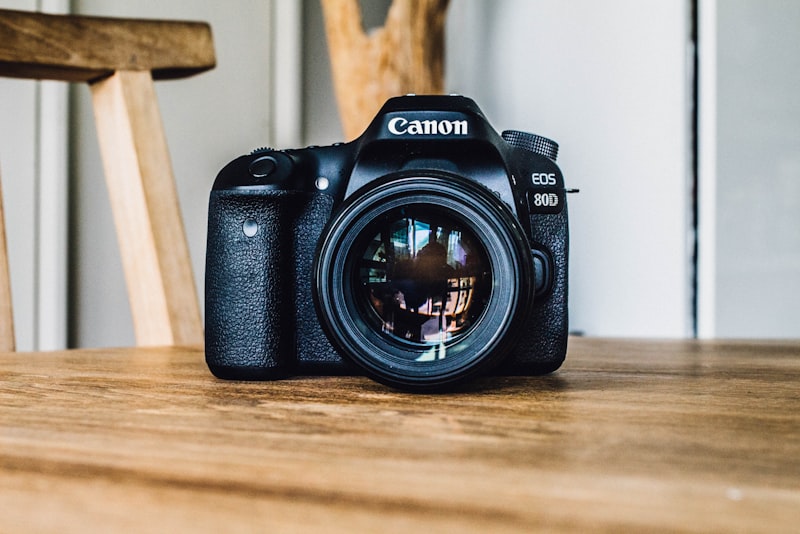
That little dial on top of your camera, the one with letters and pictures on it, can feel like a wall between you and the photographer you want to become. People glance at the M and assume it is a graduation they are not ready for, then leave the dial on Auto and quietly wonder if they are cheating.
Let me take the intimidation out of it. These modes are not ranked by skill or seriousness. They are simply different ways of dividing the work between you and the camera, and you get to choose how much of that work you want to do today. Let us walk the dial together.
The three things every mode balances#
Before the modes make sense, you need to know what they are all juggling. Every photograph is a balance of three settings, and all of them affect brightness while doing something else interesting too.
- Aperture is how wide the lens opens. It controls brightness, and also how much of the scene is in focus, the blurry-background effect.
- Shutter speed is how long the sensor is exposed. It controls brightness, and also whether motion is frozen sharp or blurred.
- ISO is the sensor's sensitivity to light. It controls brightness, and at high settings can add a grainy texture.
Every shooting mode is just a different answer to one question: who decides these three, you or the camera? That is the entire dial. Hold that idea and the letters stop being mysterious.
Auto and Program: letting the camera lead#
Auto mode hands all three settings to the camera. It reads the scene, makes sensible choices, and takes the picture. There is no shame in this. When you want to be present at a moment rather than fiddling with dials, Auto is a perfectly good friend. Many wonderful photographs have been made in Auto by people paying close attention to light and timing.
Program mode, the P on your dial, is Auto with the door left open. The camera still picks a balanced combination for you, but it lets you nudge things and usually gives you control over ISO, flash, and a few other choices. Think of P as Auto for someone who is starting to peek under the hood. It is a gentle, low-stakes place to begin learning what the settings feel like.
Aperture Priority: control the focus#
Now we reach the modes I send most people to first, the ones marked A or Av for Aperture Priority.
Here you choose the aperture, and the camera handles the shutter speed to keep the exposure right. You are taking the wheel on one creative decision, depth of field, while the camera quietly manages the rest.
This is the mode of portraits with dreamy, soft backgrounds and of landscapes sharp from front to back. You open the aperture wide for that creamy blur, or close it down to keep everything crisp, and the camera follows your lead on brightness. For so much of everyday photography, deciding how much is in focus is the most meaningful choice you can make, which is exactly why this mode feels so natural so quickly.
Aperture Priority is where most photographers fall in love with control. You make one decision that matters, and the camera takes care of the arithmetic.
Shutter Priority: control the motion#
On the other side sits S or Tv, Shutter Priority. Here you choose the shutter speed and the camera sets the aperture to match.
This is the mode of motion. A fast shutter speed freezes a leaping dog or a splashing wave into crisp stillness. A slow one lets a waterfall melt into silk or turns car lights into glowing streaks. When the story of your picture is about movement, fast or slow, this is where you go to tell it deliberately rather than leaving it to chance.
Aperture Priority and Shutter Priority are mirror images. In each, you make one creative choice and let the camera handle the balancing. Most photographers lean on one or the other depending on whether focus or motion matters more in the moment, and there is no wrong preference.
Manual: taking the wheel#
And so we arrive at M, Manual, the letter that scares people. Here is the secret: Manual is not some advanced sorcery. It is simply both priorities at once. You set the aperture, you set the shutter speed, and on most cameras you watch a little meter that tells you whether your exposure looks balanced, too bright, or too dark.
That meter is your guide. You are never working blind. You turn one dial, glance at the meter, turn the other, and find your balance. The reason to do this yourself is that sometimes you want a picture deliberately brighter or darker than the camera would choose, a bright high-key portrait, a moody dim interior, and Manual lets you commit to that vision without the camera quietly overruling you.
A gentle path forward#
You do not have to leap to Manual tomorrow. Try this unhurried progression instead:
- Spend time in Aperture Priority until choosing depth of field feels automatic.
- Visit Shutter Priority whenever motion is the point, and feel how speed shapes it.
- Once both feel familiar, switch to Manual and set those same two values yourself, leaning on the meter.
By the time you reach Manual, you will already understand everything it asks of you. It will feel less like a final exam and more like simply doing by hand what you have already learned to ask for.
Use the whole dial without guilt#
There is no trophy for shooting in Manual and no demerit for using Auto. The modes are tools, and a thoughtful photographer reaches for whichever one serves the moment. Auto for a fast-moving day with family. Aperture Priority for a quiet portrait. Manual when the light is tricky and the vision is specific.
Learn what each one does, then let the picture decide which you need. The dial was never a ladder to climb. It is a set of doors, and every one of them leads somewhere worth photographing.